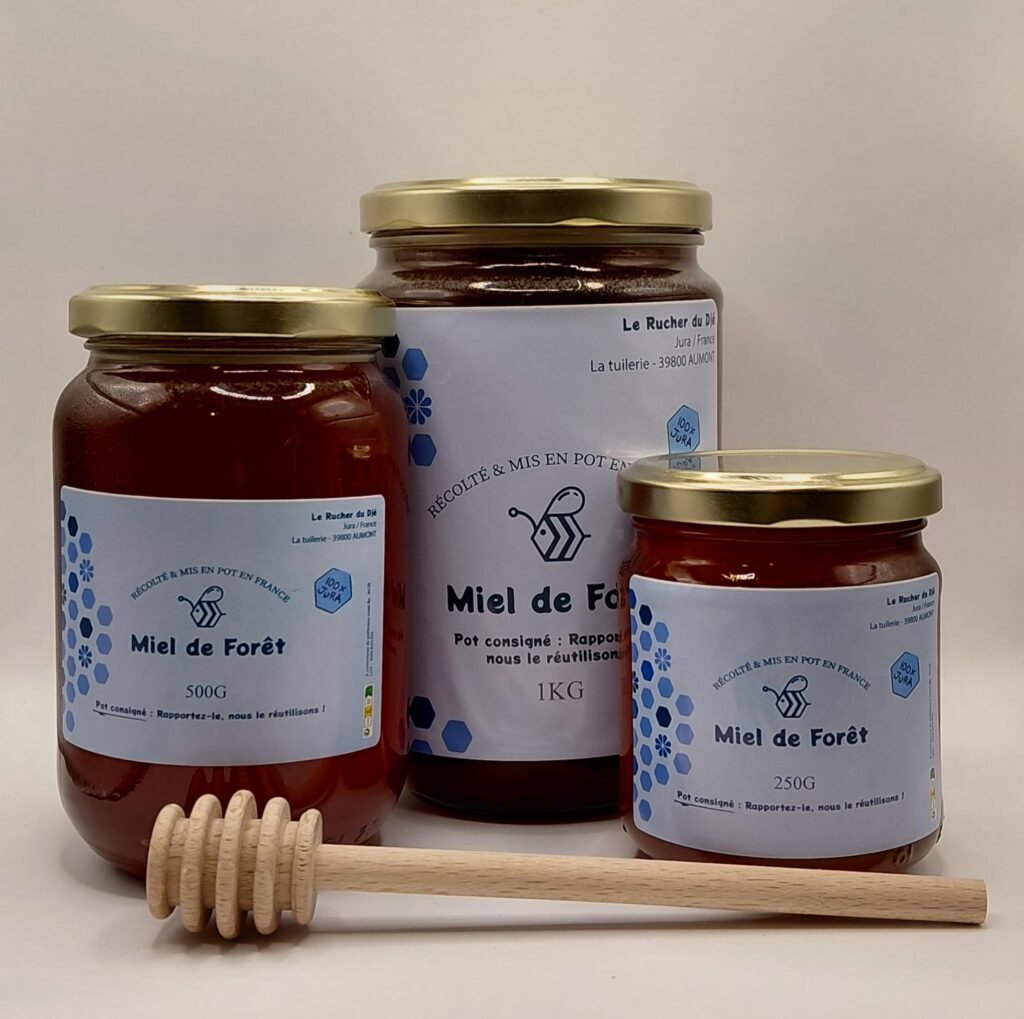
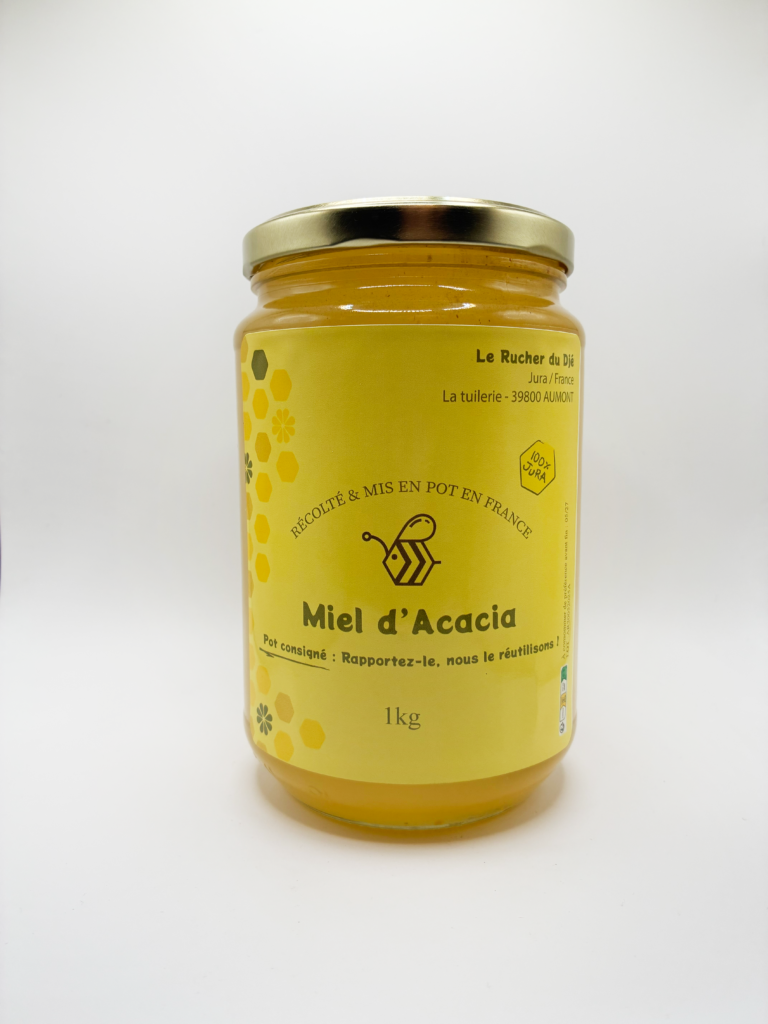
Acacia honey is probably the most popular honey in France — and for good reason. Pale, mild, naturally runny and free of any bitterness, it's the honey everyone loves, from children to the most delicate palates. Made from the nectar of the black locust tree, it stays liquid for a remarkably long time thanks to its high fructose content.
1. What is acacia honey?
Acacia honey is a single-flower (monofloral) honey, made from the nectar of black locust flowers (Robinia pseudoacacia). Despite its common name, it isn't a true acacia in the botanical sense — it's a tree native to North America that has been widespread in France since the 17th century.
The black locust is easy to spot thanks to its clusters of highly fragrant white flowers, which appear from late May to mid-June. These flowers are extremely rich in nectar, but the window during which bees can forage them is very short — often less than ten days.
It's this brief flowering period that makes acacia honey occasionally scarce. A storm, a strong wind, or a late frost during the bloom, and the whole year's harvest can be compromised.
2. Our Jura acacia honey: origin & harvest
Every spring, our hives are placed on the hillsides and forest edges of the Jura, around Aumont (39800), where black locust trees are most abundant. The goal is for the bees to forage primarily on acacia blossoms during this short nectar flow.
Harvesting takes place as soon as the frames are capped. Extraction is done cold to preserve this honey's delicate aromas. Each batch is then lab-tested to verify its quality, moisture content, and compliance.
→ Learn more about our farm and our know-how.
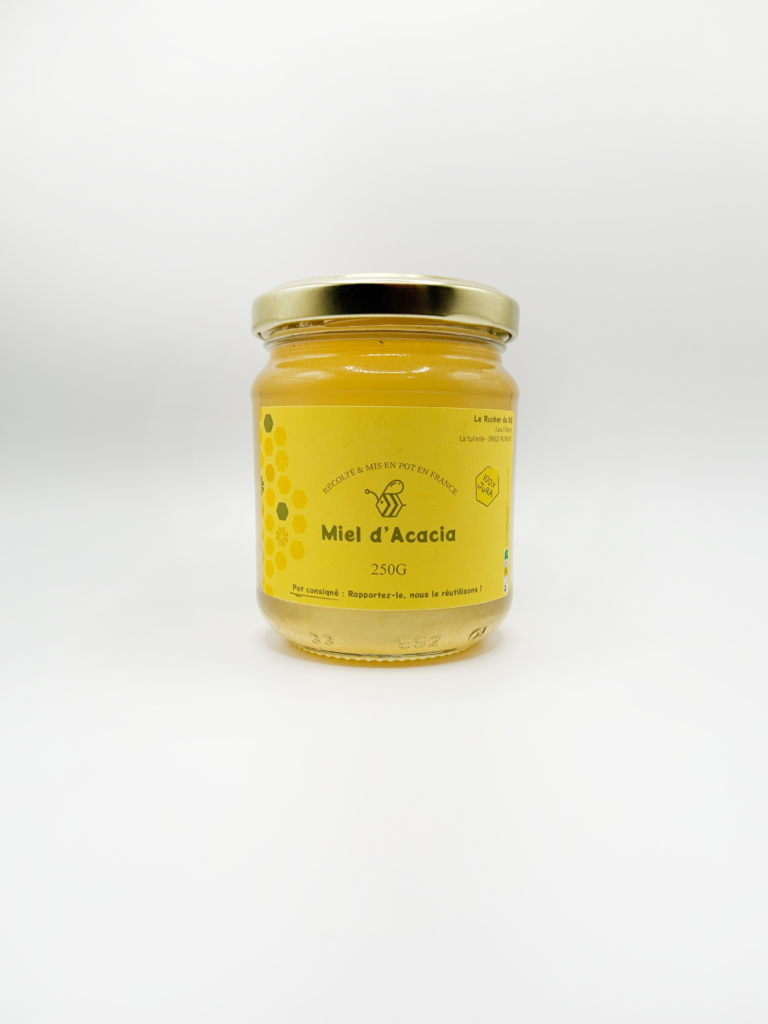
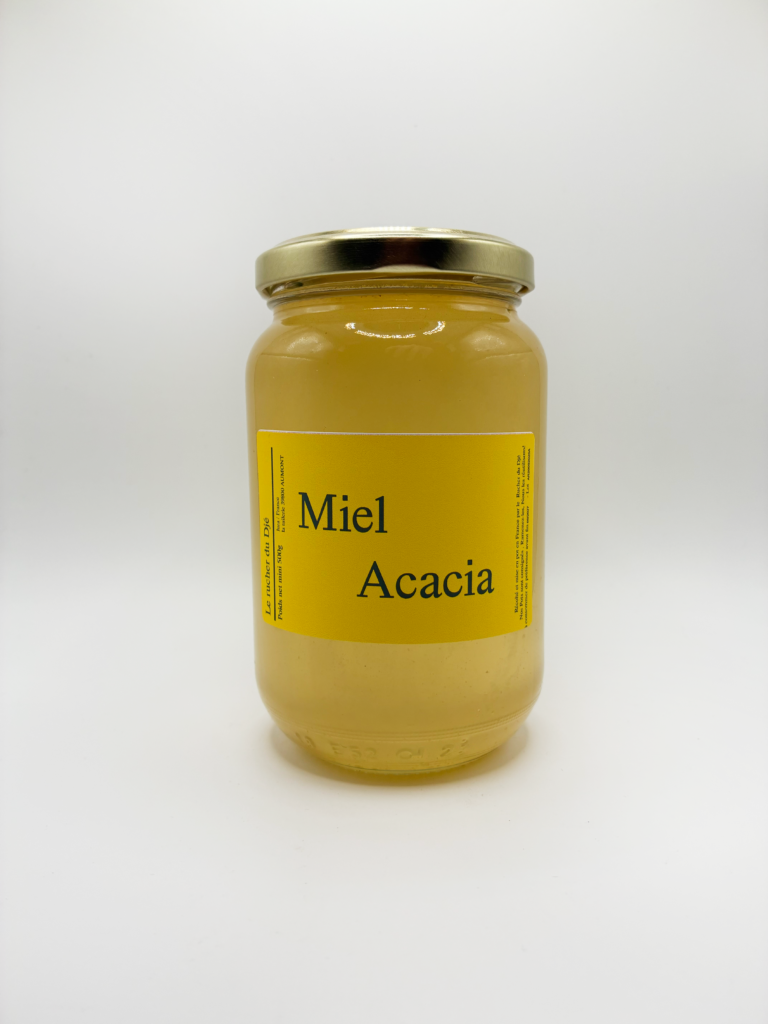
3. Taste & aromatic profile
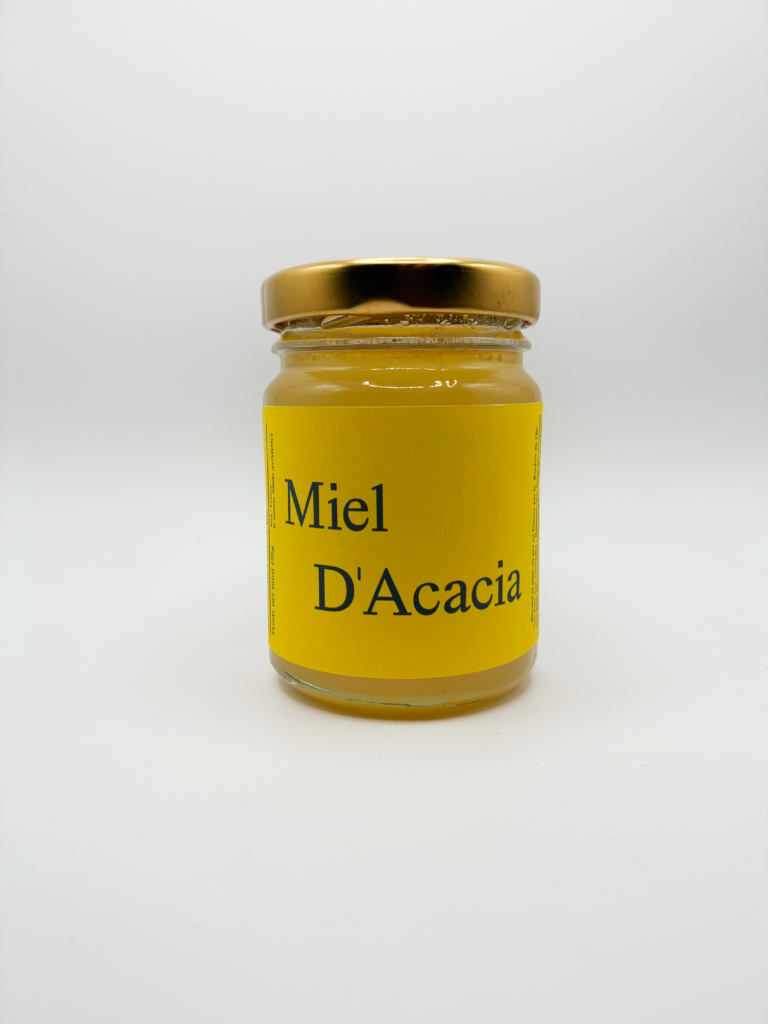
Acacia honey is the opposite of a bold, characterful honey like our forest honey or fir honey. It doesn't dominate — it complements. Its subtle taste and gentle vanilla notes make it a natural sweetener that never overpowers whatever it's paired with.
That's why it's often the first honey children come to love, and the one many people prefer for sweetening their drinks.
4. Everyday benefits
As with all our honeys, let's be honest: acacia honey is first and foremost a food to be enjoyed. It provides carbohydrates, aromatic compounds, and trace elements in varying amounts.
What sets it apart for everyday use:
- Its mildness lets you sweeten without changing the flavor. Ideal for drinks, yogurt, and recipes where you don't want the honey to "take over."
- Its low glycemic index (around 32-35) makes it one of the best-tolerated honeys in terms of blood sugar, thanks to its high fructose content.
- Its liquid texture makes it practical day to day: it pours, doses, and mixes effortlessly.
- Its total absence of bitterness makes it accessible to everyone, even people who don't like "strong" honeys.
Acacia honey is often mentioned in naturopathy for its digestive comfort. Like any honey, it remains a sweet product to be enjoyed in moderation.
5. Glycemic index & crystallization
Two things make acacia honey stand apart:
One of the lowest glycemic indexes among honeys
Acacia honey contains roughly 40 to 44% fructose and only 25 to 30% glucose. It's glucose that causes a rapid rise in blood sugar. The result: an estimated GI of around 32 to 35, well below that of a mixed-flower honey (around 50-60) or white sugar (70).
That said, a low GI doesn't mean "sugar-free." Acacia honey remains a sweet product and is no substitute for medical advice for people with diabetes.
A honey that stays liquid
It's this same high fructose content (and low glucose level) that explains why acacia honey barely crystallizes at all. It can stay fluid for months, even years, with no intervention needed. That's a huge practical advantage over honeys that set solid within a few weeks.
6. Uses in the kitchen & at the table
Where forest honey brings bold character, acacia honey brings sweetness without interference. That's its strength in the kitchen.
☕ Drinks
- Tea, herbal tea, infusions, coffee: it sweetens without altering the aroma.
- Lemon water, smoothies, cocktails.
🍞 Breakfast
- Toast, crêpes, pancakes: it pours perfectly.
- Plain yogurt, fromage blanc, porridge, granola.
- For kids: it's the ideal honey for morning toast.
🍰 Baking
- Replacing white sugar: use roughly 80 g of honey per 100 g of sugar and slightly reduce the liquid in the recipe.
- Madeleines, financiers, cakes, custards, crème brûlée.
- Acacia honey adds moistness without darkening the batter (unlike darker honeys).
🧀 Cheese pairings
- Fresh goat cheese, brie, camembert, roquefort: its mildness balances the strength of the cheese.
- Unlike forest honey, which pairs better with hard pressed cheeses (Comté, Morbier).
→ Discover our full range of Jura honeys
7. Comparisons: forest, fir, linden & more
| Honey | Color | Taste | Texture |
|---|---|---|---|
| Pale yellow, transparent | Very mild, vanilla, subtle | Liquid, doesn't crystallize | |
| Dark amber to brown | Woody, intense, faint bitterness | Fluid, crystallizes slowly | |
| Very dark, almost black | Resinous, very pronounced | Fluid, crystallizes very slowly | |
| Linden | Light yellow to amber | Minty, fresh, floral | Crystallizes fairly quickly |
| Mountain | Medium amber | Floral, herbaceous | Crystallizes moderately |
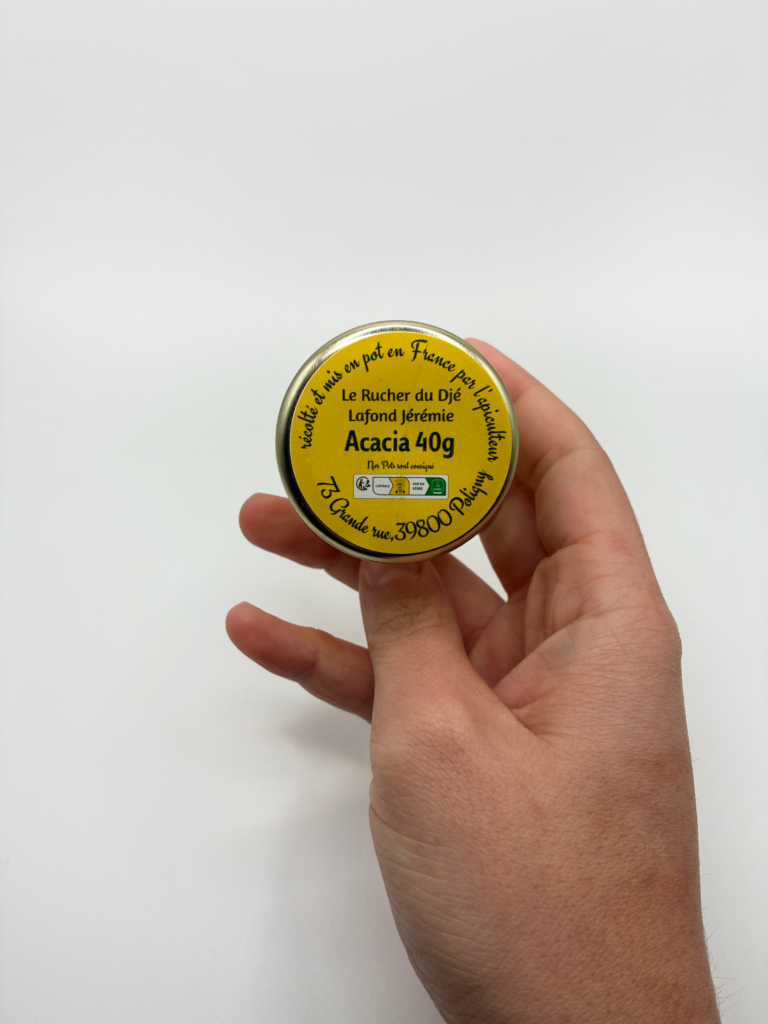
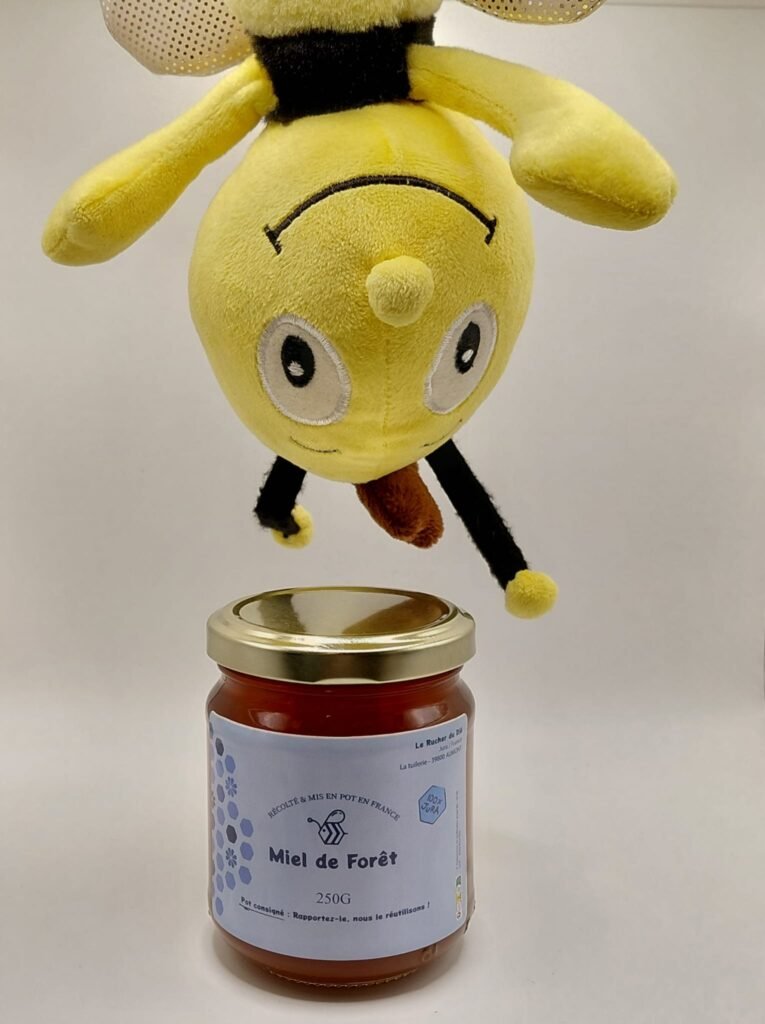
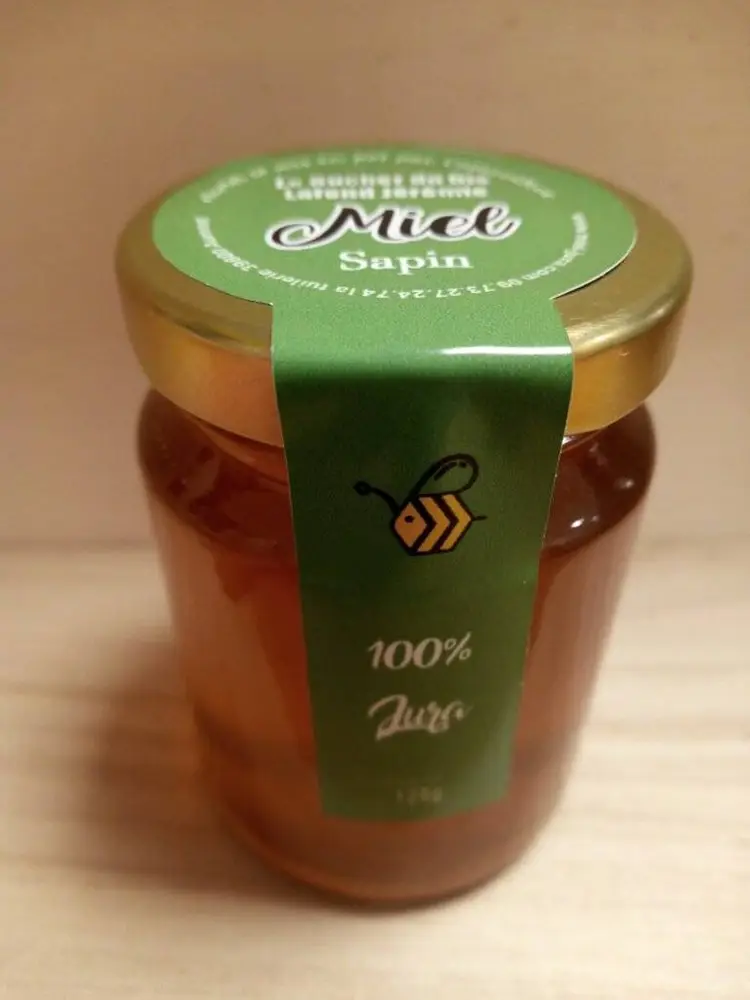
In short: if you're after a mild, subtle honey for sweetening, acacia is the ideal choice. If you want bold character and pronounced aromas, go for forest or fir honey instead.
8. Storage
Acacia honey is one of the easiest honeys to store:
- Away from light and heat, in a cupboard, between 14 and 20°C (57-68°F).
- No refrigerator needed: it's unnecessary and could actually speed up premature crystallization.
- Keep the jar tightly closed to prevent moisture absorption.
Acacia honey naturally stays liquid for a long time (several months to over a year). If it does crystallize slightly over time, a gentle water bath (≤ 35°C / 95°F) will make it fluid again in just a few minutes.
Order our Jura acacia honey
Harvested on the hillsides of the Jura, jarred by hand on our farm.
Available from 125 g to 1 kg.
You may also like